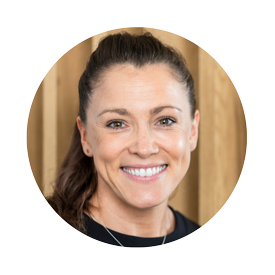
Doing less to do more
For many dentists, the path into digital workflows can feel complex or even intimidating. For Michaela Sehnert, it became a natural evolution—one driven by curiosity, independence, and a desire to work smarter, not harder. An exocad hero of digital dentistry and speaker at the upcoming exocad Insights, Michaela has built a thriving, modern practice by empowering her team and embracing digital tools early. Her journey blends technical innovation with deeply personal insights on leadership, family, and growth. In this exoBlog, she shares how she got started, what digital dentistry really changed in her practice, and why she believes the future belongs to those willing to adapt.
Q: How did you first get into dentistry? What inspired you?
A: I always knew I wanted to work with people. Even as a child, I liked helping. If someone was hurt at home, I wanted to take care of them. I did an internship in a large clinic and found it fascinating to see so many different cases. But I also noticed how hierarchical everything was. Decisions took time, and I realized I didn’t want to work in a system like that.
I explored medicine, but then I discovered dentistry. My grandfather was a woodworker, and I spent a lot of time with him growing up. He always told me I was good with my hands. That moment stayed with me. Dentistry felt like the perfect combination, working with people and working with my hands, with the possibility of building something of my own.
Q: You started your own practice quite early. What motivated that decision?
A: After university in Germany, you work for two years as an employed dentist. I learned a lot during that time, but I kept running into the same limitation: whenever I wanted to change something, I had to ask for permission. I realized I wanted to make decisions faster and reach my full potential. Near the end of those two years, I found a dentist who was retiring with a practice nearby. I saw the potential immediately. Some of the existing team wanted a fresh start, too, so they joined me. It all happened very quickly.
In 2016, I opened my clinic, renovated everything, and began digitalizing from day one. We started small, with three chairs, but with a clear vision.
“We introduced scanners and visualization tools—not just for patients, but for the team. Suddenly, hygienists could clearly see and explain issues. That changed everything.”
Q: What advice would you give to dentists bringing teams into digital workflows?
A: Traditional dentistry is very top-down. The dentist decides, and everyone else follows. I didn’t want that. My team already had knowledge and experience. The question was: how can we help them make decisions independently? We introduced scanners and visualization tools—not just for patients, but for the team. Suddenly, hygienists could clearly see and explain issues. That changed everything. The team became more confident, more proactive, and I could delegate much more. In the end, the workflow improved across the entire patient journey, and I spent less time at the chairside while achieving better results.
Q: When did digital dentistry really become central to your practice?
A: Around 2020, after COVID, we started working more seriously with digital approaches like exocad software. We had learned about chairside workflows earlier, but the technology wasn’t always reliable. As we wanted to take on more complex cases—larger restorations, full workflows—we needed better tools. That’s when we made the shift.
Q: Are there any tools or workflows that stand out?
A: The AI crown feature in DentalCAD 3.3 Chemnitz is a complete game changer. We were already fast, but this made things even more efficient and easier to delegate. The Smile Creator Module also gave us confidence, especially in anterior cases. What used to feel complicated, matching photos and scans, became simple. That allowed us to bring more work in-house and trust our results.
“Dentists often lose time…fixing issues instead of working efficiently, and that costs both time and money. With digital workflows, we reduced chair time, improved quality, and increased satisfaction for patients and the team.”
Q: Your Insights 2026 lecture is titled “Less time, less waste, more smiles.” What’s the key message?
A: Dentists often lose time where it matters most—at the chair. We spend time fixing issues instead of working efficiently, and that costs both time and money. With digital workflows, we reduced chair time, improved quality, and increased satisfaction for patients and the team. There’s a learning curve, but the return comes quickly.
Michaela shares more about her Insights 2026 lecture on digital workflows.
Q: You manage two practices and a family. How do you approach work-life balance?
A: I reflect often on what I can improve. I started my career while raising two children, so efficiency was never optional. Today, I work three days a week in the clinic. The other days are for planning, personal development, and time with my family. Interestingly, working fewer clinical days made the practice more successful. My team also works fewer days now, but with more focus and energy. It’s not about working less, it’s about working smarter.
“Leadership isn’t about gender. I never saw myself as a ‘female leader,’ just as a person responsible for a team. If something goes wrong, it’s not because you’re a woman, it’s because something in management needs improvement.”
Q: You will also be a panelist at the “Women in dentistry” lunch at exocad Insights. What message do you want to share?
A: Two things: balance and leadership. You don’t need to be everywhere all the time. It’s about quality, not quantity, whether at work or with your family. And leadership isn’t about gender. I never saw myself as a “female leader,” just as a person responsible for a team. If something goes wrong, it’s not because you’re a woman, it’s because something in management needs improvement. Don’t limit yourself. Be brave, make decisions, and learn from mistakes.
Q: Who has influenced you the most?
A: My grandfather. He taught me to focus on strengths, stay positive, and ask for help when needed. He showed me that you can’t do everything alone, and that’s okay.
Q: If you weren’t in dentistry, what would you be doing?
A: I would probably own a café or work as a flight attendant. I love connecting with people and hearing their stories.
Q: One word to describe exocad?
A: Game changer.
Q: Any final advice for dentists considering digital workflows?
A: Don’t be afraid to build an in-house lab. With the right software, it’s very manageable and can significantly improve efficiency and outcomes. External labs are still essential, but combining both approaches gives you much more control and better results.
Michaela Sehnert is a dentist and practice owner based in Halle (Saale), Germany. She graduated top of her class from Leipzig University in 2013 and founded her first practice, gesundesweiss, in 2016, where she focuses on a holistic and patient-centered approach. Her expertise includes aligner therapy, implantology, and preventive dentistry, with an emphasis on digital workflows and individualized care. Sehnert is a sought-after speaker for Align Technology, the C.L.E.A.R. Institute and Straumann, and serves as president of the German Society for Interdisciplinary Aligner Therapy (DGiA). In 2025, she expanded her work by founding gesundesweiss group GmbH and opening a second practice to advance modern, accessible dentistry. Michaela is the mother of two children and stands for a forward-looking, human-centered dentistry that unites innovation with responsibility. Follow her work on Instagram.

by Caitlan Reeg
Writer at exocad
Caitlan Reeg spends her days telling the world about the innovations her colleagues create. She’s passionate about healthcare, technology, and the ways the two interact to improve our lives. A former journalist, Caitlan has worked on staff at Dow Jones Newswires in Frankfurt and at the national public radio program Marketplace in Los Angeles.